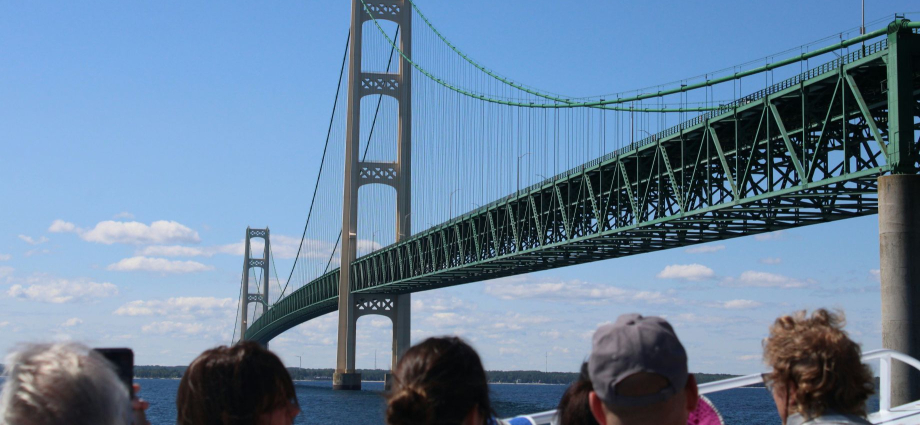
Mackinac Bridge Facts: The World’s Longest Suspension Bridge When Built in 1957
If you are looking for the most jaw-dropping Mackinac Bridge facts, you have come to the right place. I still remember the first time I drove across the Mighty Mac — white-knuckled, windows fogged, the steel cables humming in the November wind like a cathedral organ — and thought, “How on earth did they build this thing?” Stretching across the Straits of Mackinac between Michigan’s Lower and Upper Peninsulas, this engineering marvel was the longest suspension bridge in the world when it opened in 1957, a title it held for decades.
Whether you are planning your first crossing or your fiftieth, the history, construction details, and living traditions of this bridge will leave you genuinely amazed. Pull up a chair, because Mackinac Bridge history runs deep.
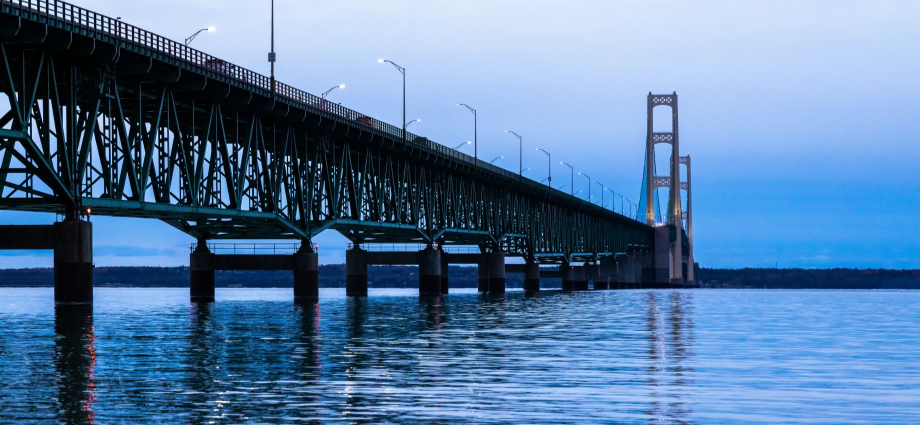
Mackinac Bridge History: Why the Bridge Was Built
For nearly a century before the bridge existed, the only way to cross the Straits of Mackinac was by ferry. In summer, that was a pleasant enough experience — crisp lake air, seagulls overhead, the faint smell of diesel and cold water. In winter, it was a nightmare. Ferries could be shut down for days by ice and storms, leaving travelers stranded on both shores, sometimes for a week or more. Truck drivers hauling goods between the peninsulas had no reliable schedule. Tourism to the Upper Peninsula was genuinely stunted by the uncertainty.
The Long Road to Approval
The idea of a fixed crossing at the Straits was floated as early as 1884, but serious momentum did not build until the post-WWII economic boom. Michigan formed the Mackinac Bridge Authority in 1950, and the project finally received financial backing through bond sales — not state tax dollars — a fact that still surprises most visitors I tell it to. The total bond package came to $99.8 million, a staggering sum in the early 1950s. By 1953 the design was finalized, and ground broke in 1954.
The Visionaries Behind the Mighty Mac
Engineer David B. Steinman was chosen to design the bridge, and he brought obsessive precision to the project. Steinman had already designed dozens of bridges worldwide, but he called the Mackinac his masterpiece. He engineered the deck to flex — up to 35 feet laterally in extreme winds — rather than resist the powerful Straits gales, a counterintuitive but brilliant solution that has kept the structure sound for nearly seven decades. For a deeper look at Mackinac Bridge history and related landmarks, the Pure Michigan travel site offers excellent background reading.
Building Mackinac Bridge 1957: Construction Facts You Won’t Believe
Building Mackinac Bridge in 1957 — or rather, completing it by that year after three years of work — was one of the most dangerous and complex construction projects in American history. At peak construction in 1956, more than 3,500 workers were on the job every day. They worked in conditions that would make modern OSHA inspectors faint: open water, brutal winds, icy cables, and dizzying heights above the Straits.
The Human Cost
Five workers lost their lives during construction, a toll that weighs on the bridge’s legacy and is honored every year during the Labor Day Bridge Walk. Their names are remembered — Frank Pepper, James LaBarge, Albert Abbott, Jack Baker, and Robert Koppen — and a small memorial near the toll plaza acknowledges their sacrifice. When I cross the bridge, I always think of them, especially when the steel grates hum underfoot.
Logistics of the Build
The raw materials involved in building Mackinac Bridge 1957 are staggering. Workers poured 466,300 cubic yards of concrete and used 71,300 tons of structural steel. The two main towers were sunk into the bedrock of the Straits floor, in water up to 200 feet deep. Massive caissons were floated into position, sunk, and filled with concrete — a process that had to account for ferocious currents and unpredictable Straits weather. The entire project employed a fleet of specialized barges, cranes, and diving teams working simultaneously.
Pro Tip: The Mackinac Bridge Museum in St. Ignace, located just steps from the north tower, is free to enter and houses original construction photos, equipment, and worker stories. It is small but absolutely worth an hour of your time before or after you cross.
Mackinac Bridge Length and Key Dimensions
One of the most common questions I get from first-time visitors is about Mackinac Bridge length — and the answer depends on how you measure it. The numbers below give you the full picture.
| Measurement | Distance / Stat |
|---|---|
| Total length (bridge structure) | 26,372 feet (almost 5 miles) |
| Main suspension span | 3,800 feet |
| Tower height above water | 552 feet |
| Clearance above water at mid-span | 199 feet |
| Number of main cables | 2 (each 24.5 inches in diameter) |
| Wire strands per cable | 12,580 |
| Total wire in both cables | Approximately 42,000 miles |
| Year opened to traffic | November 1, 1957 |
| World record held | Longest suspension bridge, 1957–1964 |
When the Mackinac Bridge opened on November 1, 1957, the main span of 3,800 feet made it the longest suspension bridge in the world — surpassing New York’s George Washington Bridge. It held that record until the Verrazano-Narrows Bridge opened in New York in 1964. The total Mackinac Bridge length of nearly five miles still makes it one of the longest suspension bridges on the planet by overall structure.
Engineering Feats and Record-Breaking Numbers
Beyond raw Mackinac Bridge length, the engineering achievements stack up in remarkable ways. The bridge is designed to carry traffic safely in winds up to 150 miles per hour. The roadbed is actually two separate lanes of open steel grating on the outer edges — which you can see through directly to the water below — with two lanes of paved concrete in the center. Driving on those outer grates for the first time is an experience you will not forget. Your tires make a high-pitched whine, and on a clear day you can look straight down 199 feet to the cold blue water of the Straits.
Painting and Maintenance
Maintaining the Mighty Mac is itself a full-time operation. The bridge employs a crew of painters year-round — yes, year-round — because by the time they finish painting the entire structure, it is time to start again. More than 800,000 vehicles cross the bridge annually, and the Mackinac Bridge Authority monitors structural integrity continuously with modern sensor systems embedded throughout the cables and deck.
Insider Tip: If you are nervous about driving across — especially in wind or on a motorcycle — the Bridge Authority offers an escort service. A trained driver will take your vehicle across for you at no extra charge. Thousands of people use this service every year and there is absolutely no shame in it.
The Labor Day Bridge Walk Tradition
Every Labor Day morning since 1958, Michigan governors have led thousands of walkers across the Mackinac Bridge on foot — and this tradition is one of the most beloved in the entire state. The Labor Day Bridge Walk covers the full five-mile length of the bridge, beginning in St. Ignace on the Upper Peninsula side and ending in Mackinaw City on the Lower Peninsula side. Participation has reached upward of 60,000 people in popular years.
What the Walk Is Actually Like
I walked it on a bright September morning a few years ago, and the experience is hard to put into words. The bridge hums and sways just slightly underfoot — more than you expect — and the wind off Lake Michigan carries that clean, cold smell of deep water that you only get in northern Michigan. You can see the white sail shapes of boats on the Straits below, and on a clear morning the view stretches to Mackinac Island on the eastern horizon. Children walk it, grandparents walk it, people in wheelchairs cross it. It feels genuinely communal in a way that is rare today.
Walk Logistics and Tips
The walk is free, open to the public, and walkers start from St. Ignace. Shuttle buses run back from Mackinaw City to your starting point vehicle. Arrive early — the crowd is enormous and parking fills quickly on both sides. Comfortable shoes are essential; the steel grating sections will chew up thin soles. The walk is typically held rain or shine, but can be cancelled in severe weather. You can check official dates and any updates through the Mackinac Bridge Authority website before your trip.
Crossing the Bridge: Tips for Drivers and Visitors
A Michigan road trip that includes the Mackinac Bridge is one of the great American drives. Here is what to know before you go.
Toll and Crossing Info
As of my last crossing, the toll for a standard passenger vehicle is $4 southbound (Lower Peninsula direction). Northbound travel is free. The Bridge Authority accepts cash, credit cards, and the Michigan-based MAC Pass transponder for frequent crossers. Traffic can back up significantly on summer weekends and holiday weekends, especially around the Labor Day Walk. If you can cross on a weekday morning, the experience is far more relaxed.
Pairing Your Bridge Visit
The bridge is a natural anchor for exploring both peninsulas. On the Upper Peninsula side, St. Ignace has good pasties and waterfront dining — try a beef pasty while you are still tasting the lake air from your crossing. From there you can head west to see Pictured Rocks or explore the broader Upper Peninsula. On the Lower Peninsula side, Mackinaw City connects you south toward Traverse City, the Sleeping Bear Dunes, and beyond. The Michigan lighthouses of the Straits area — including the Old Mackinac Point Lighthouse — are worth an afternoon in themselves.
Frequently Asked Questions About Mackinac Bridge Facts
How long is the Mackinac Bridge?
The total Mackinac Bridge length is 26,372 feet, or just under five miles. The main suspension span between the two towers is 3,800 feet. When it opened in 1957, this main span made it the longest suspension bridge in the world.
Was the Mackinac Bridge really the longest bridge in the world?
Yes — when it opened on November 1, 1957, the Mackinac Bridge held the record for the longest suspension bridge in the world by main span. It held that title until 1964, when New York’s Verrazano-Narrows Bridge surpassed it. By total overall length of the suspension structure, the Mighty Mac still ranks among the longest in the world.
How many people died building the Mackinac Bridge?
Five workers lost their lives during construction: Frank Pepper, James LaBarge, Albert Abbott, Jack Baker, and Robert Koppen. Their sacrifice is honored annually during the Labor Day Bridge Walk and recognized near the toll plaza.
When is the Mackinac Bridge Labor Day Walk?
The Labor Day Bridge Walk takes place every Labor Day morning, typically starting around 7:00 a.m. from St. Ignace. It has been held almost every year since 1958 and is led by the Governor of Michigan. It is free and open to the public. Always confirm dates and any changes with the official Mackinac Bridge Authority before you go.
Can you walk across the Mackinac Bridge anytime?
No — pedestrian access is only permitted during the annual Labor Day Bridge Walk. The rest of the year the bridge is open to vehicle traffic only, though the Bridge Authority does offer a driver escort service for those who are uncomfortable driving it themselves.
Is the Mackinac Bridge scary to drive across?
It can feel intimidating, especially the outer lanes of open steel grating through which you can see the water 199 feet below. High winds are common and the bridge sways slightly by design. If you feel uncomfortable, request a free driver escort from the Bridge Authority — trained staff will drive your vehicle across while you ride as a passenger.
What are the best Mackinac Bridge facts for kids?
Kids tend to love these: the wire inside both main cables stretches for 42,000 miles — enough to circle the Earth almost twice. The towers are taller than a 55-story building. And the bridge is designed to flex up to 35 feet side to side in the strongest winds, like a very slow, very giant pendulum.
The Mackinac Bridge is far more than a way to get from one side of Michigan to the other — it is a symbol of what determined people can build, a living piece of engineering history, and the dramatic gateway to some of the best travel experiences in the Midwest. Whether you come for the Mackinac Bridge facts, the Labor Day Walk, or simply the unforgettable drive with Lake Michigan shimmering on both sides, you will leave with a story worth telling. From here, keep exploring everything Michigan has to offer: go find Petoskey stones on a northern Michigan beach, hike the trails in Michigan’s best hiking spots, paddle a river on a Michigan kayaking adventure, or spend a night under the stars at one of the top Michigan camping spots near the water. The Mighty Mac is just the beginning.