You’re Never More Than 6 Miles From Water in Michigan
If you’ve ever heard the saying that you’re never more than 6 miles from water in Michigan, I’m here to tell you it’s not just a fun party fact — it’s the kind of truth that completely changes how you think about traveling this state. With over 11,000 inland lakes, more than 36,000 miles of rivers and streams, and four of the five Great Lakes wrapping around its borders, Michigan is simply unlike anywhere else in the country.
That Michigan water fact hits differently once you’re standing barefoot on a sandy lakeshore, listening to waves lap at your ankles while a osprey circles overhead. Whether you’re chasing Michigan waterfalls, paddling quiet rivers, or just pulling over on a road trip because something shimmered through the trees, water is always close. This article is your invitation to stop treating Michigan’s lakes and rivers as a backdrop and start treating them as the destination.
The Wildly True Michigan Water Fact
The claim that you’re never more than 6 miles from water in Michigan comes from the sheer density of the state’s hydrological network. When you count every named lake, river, creek, stream, and Great Lakes shoreline mile, the math works out to something almost poetic. Michigan has more freshwater coastline than any other state in the continental U.S. — over 3,288 miles of Great Lakes shoreline alone. Spread across the Lower and Upper Peninsulas, that network of water is so finely woven into the landscape that you genuinely cannot drive very far without crossing a bridge, spotting a glint of blue through the pines, or smelling that particular clean, cold scent that only open water carries on a summer breeze.
I remember driving a back road through Osceola County on a whim once, no destination in mind, and within four minutes I was parked next to a lake I’d never heard of with a family of mergansers paddling past like they owned the place. That’s Michigan. The water finds you whether you planned for it or not.
Local Tip: Download the Pure Michigan DNR lake finder app before your trip. You can search for public lake access points anywhere in the state, and you’ll be stunned how many small, crowd-free lakes are sitting just off roads you’ve driven a hundred times.
Michigan 11,000 Lakes: More Than Just a Number
Minnesota may have claimed the “Land of 10,000 Lakes” slogan first, but Michigan’s 11,000-plus inland lakes quietly outpace the competition. The Michigan 11000 lakes statistic covers only lakes with names — the actual count of bodies of water is significantly higher. These range from tiny kettle lakes left behind by glaciers (some so small they don’t show up on standard maps) to sprawling inland seas like Houghton Lake, the largest inland lake in Michigan at over 20,000 acres.
Glacial Lakes and Why They Matter
Almost every one of Michigan’s inland lakes owes its existence to the last ice age. As glaciers retreated roughly 10,000 years ago, they carved out basins, deposited ridges, and left behind a landscape so pocked with water that early settlers must have thought they’d landed somewhere between a dream and a flood. The result is a mix of lake types — crystal-clear spring-fed lakes in the north, warmer, shallower lakes in the south perfect for families, and deep cold-water lakes that hold trout year-round. If you’re searching for Michigan cabin rentals near the water, the inland lake options alone could keep you busy planning for years.
Hidden Gems Nobody Talks About
Most visitors head straight for the Great Lakes coastline, and I get it — those beaches are stunning. But some of my favorite Michigan memories happened on small inland lakes that never make a listicle. If you want to explore further off the beaten path, check out our roundup of Michigan hidden gems for lakes and towns that feel genuinely undiscovered.
Rivers That Deserve a Spot on Your Bucket List
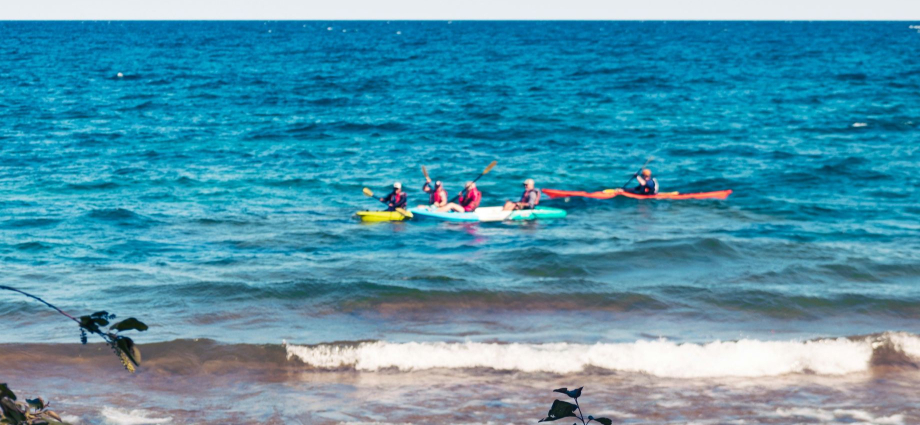
When people picture Michigan’s water, they usually think lakes first. But the rivers — oh, the rivers — deserve equal billing. The AuSable, the Manistee, the Betsie, the Pere Marquette: these are cold, gin-clear trout streams that have been drawing fly fishers and paddlers for over a century. You can smell the cedar and iron-rich tannins in the water before you even see the river, and when you finally push a kayak off the bank and feel the current take you, it’s one of the most effortless forms of joy I’ve ever experienced.
For a full breakdown of where to put in and what to expect, our guide to Michigan kayaking covers the best rivers by region, skill level, and season. Whether you want a lazy two-hour float or a multi-day wilderness paddle, Michigan rivers deliver.
Insider Tip: The best river paddling in Michigan happens mid-week in late August and early September. The crowds thin out, the water levels are typically stable, the colors start turning at the edges, and you can hear actual nature instead of other people’s Bluetooth speakers.
The Great Lakes vs. Inland Lakes: What’s the Difference for Travelers?
This is a question worth answering honestly, because the experiences are genuinely different. Great Lakes beaches — especially along Lake Michigan beaches — offer dramatic dune scenery, powerful surf-like waves, and the visual illusion of standing at an ocean. Inland lakes tend to offer calmer water, warmer swimming temperatures, easier fishing access, and a cozier, more intimate feel.
| Feature | Great Lakes | Inland Lakes |
|---|---|---|
| Water Temperature (Summer) | 55–70°F | 70–80°F |
| Waves | Often significant | Usually calm |
| Crowds | Higher at popular spots | Often much lower |
| Swimming | Excellent but cold | Ideal for families |
| Fishing | World-class salmon, trout | Bass, walleye, pike |
| Scenery | Dramatic, open horizon | Intimate, forested |
| Boat Access | Marinas required | Small ramps common |
Both have a place in a great Michigan itinerary. I’d argue you haven’t really seen Michigan until you’ve experienced both — maybe a morning on an inland lake watching the mist lift off the water, then an afternoon at a Great Lakes beach watching the sun drop toward the horizon like a slow-motion firework.
Where to Find Michigan’s Best Water Experiences
The beauty of never being more than 6 miles from water in Michigan is that it applies everywhere — urban, rural, northern, southern. Here’s where to focus your energy depending on what kind of water experience you’re after.
Northern Lower Peninsula
Traverse City sits at the tip of Grand Traverse Bay and gives you immediate access to both the bay and dozens of surrounding inland lakes. It’s also a short drive from Sleeping Bear Dunes, where the freshwater beaches honestly rival anything I’ve seen in coastal New England. While you’re up there, the Michigan wine trail follows the Lake Michigan shoreline through some spectacular vineyard scenery — wine and water, an underrated combination.
Upper Peninsula
The Upper Peninsula is where Michigan’s water gets wild and remote. Pictured Rocks National Lakeshore stretches 42 miles along Lake Superior’s southern shore, with sea caves, waterfalls tumbling directly into the lake, and water so blue it looks digitally enhanced. The UP also has some of the best Michigan state parks for lakeside camping, where falling asleep to the sound of Superior waves is a genuine possibility.
Mackinac Island
Surrounded by the Straits of Mackinac where Lake Huron and Lake Michigan meet, Mackinac Island offers a water experience unlike anywhere else in the state — accessible only by ferry, car-free, and ringed by some of the most photographed shoreline in the Midwest. The water around the island has a luminous quality in July, almost turquoise in the shallows.
Planning Your Water-Centered Michigan Trip
The easiest way to structure a Michigan trip around water is to pick a region and let the lakes and rivers connect your stops. A Michigan road trip along the Lake Michigan shore, for instance, gives you beach access, lighthouse stops, and inland lake detours all in one corridor. For families, a Michigan camping trip near an inland lake balances easy swimming, fishing, and hiking without the logistical complexity of Great Lakes surf. If you want more comfort, Michigan glamping near the water has exploded in recent years, with lakefront glamping options that didn’t exist five years ago.
For the most current information on Michigan travel planning, Pure Michigan maintains an excellent resource hub with regional trip ideas and seasonal event listings.
Frequently Asked Questions
Is it true you’re never more than 6 miles from water in Michigan?
Yes, this is a well-documented Michigan water fact. With over 11,000 inland lakes, more than 36,000 miles of rivers and streams, and over 3,200 miles of Great Lakes coastline, the density of water across both peninsulas means that at virtually any point in the state, you are within 6 miles of a named body of water.
How many inland lakes does Michigan have?
Michigan has over 11,000 named inland lakes, which is actually more than Minnesota’s famous 10,000. When you count unnamed ponds, wetlands, and reservoirs, the number climbs considerably higher. The Michigan 11000 lakes figure is based on lakes large enough to appear on state survey maps.
What are the best inland lakes to visit in Michigan?
Some of the most popular inland lakes include Houghton Lake, Crystal Lake near Frankfort, Torch Lake (often compared to Caribbean water for its color), Higgins Lake, and Walloon Lake near Petoskey. Each offers a distinct experience, from resort-town energy to quiet, forested seclusion.
What rivers are best for kayaking in Michigan?
The AuSable River, Manistee River, Pere Marquette River, and Betsie River are consistently ranked among the best paddling rivers in the Midwest. All four offer a mix of gentle floats and more challenging sections, surrounded by old-growth forest and wildlife you’ll hear before you see them.
When is the best time to visit Michigan’s inland lakes and rivers?
Late June through early September offers the warmest water temperatures and most reliable weather. For paddling and fishing without crowds, late August and September are ideal. Fall color along the rivers — especially in the northern Lower Peninsula — peaks in early October and is genuinely one of the most underrated Michigan experiences I can point you toward.
Michigan’s water isn’t just scenery — it’s the whole point. Once you internalize that you’re never more than 6 miles from water in Michigan, you start to see every drive, every hike, and every overnight trip differently. There’s always a lake on the other side of those trees, a river running under that bridge, a beach worth pulling over for. If you’re ready to go deeper, explore our guides to Michigan beaches, Michigan hiking near the water, the best places to find Petoskey stones along the shore, and Michigan lighthouses worth building a whole trip around. The water is waiting, and it’s closer than you think.